• Work
  • About

MACKINNONWORKS

  • Work
  • About

Black Rain at CPH:DOX

I'll be presenting my work-in-progress project Black Rain at CPH:DOX in Copenhagen on March 21. The presentation will be part of ANIDOX Lab's session at the DOX:ACADEMY.

Download a flyer for the event. 

Black Rain is a short animated documentary currently in creative development. It explores perception, the relationship of the body and the mind, and the experience of pain. 

This project in development is an animated documentary about the poorly-understood condition of chronic pain, and about those who experience it. These ordinary men and women overcome huge obstacles every day, in order to find ways to manage their pain and continue with their lives. It is a story of the mysteries of the brain and the resilience of the heart, told through a poetic visual synthesis of science and subjective experience. Pain is humanity’s most effective survival system; it alerts us to mortal threats through a complex communication system between the external world, the body and the brain. This film looks at what happens when this system breaks – the threat disappears, the body heals, but the pain signals in the brain persist - so also does the sensation of pain. Across the world, 14 million individuals are experiencing life through a lens of chronic pain. The medical profession has no effective cure for this condition, which affects every element of many sufferers’ lives – mobility, emotion, confidence, concentration, compassion, social and professional skills. The best treatments are bespoke constellations of management techniques including medication and physical therapy as well as mindfulness and other psychological techniques. Some sufferers of severe chronic pain are destroyed by it, others find ways to accept their condition and continue living. Sound Design by New Adult Additional animation by Tim Divall and Morten Andersen Sound mix by Mike Wyeld
Saturday 02.11.17
Posted by Carla MacKinnon
 

Animated Documentaries at London International Animation Festival

The London International Animation Festival (LIAF) has included a dedicated screening of animated documentaries in its programme for the last nine years. In a recent interview Festival Director Nag Vladermersky told me that when the documentary-focused screening was first devised it showcased both new and old work, but over the years the quantity of animated documentary submissions the festival has received has increased and the screening now includes only new work. Vladermersky observes that film and animation schools are producing a growing number of student films in the animated documentary form, which in combination with the growth in funded animated documentaries supported by organisations such as Wellcome Trust, has led to this sharp increase in submissions. The LIAF animated documentary screening provides a good opportunity for the festival to reach new audiences; Vladermersky notes that the screening is marketed to documentary enthusiasts as well as to the animation community.

In recent years the LIAF animated documentary screening has seen steadily increasing audiences, and feedback from the events are excellent, with audience members 'quite effusive' in their written feedback. Vladermersky believes that the quality of filmmaker discussion after the screening is particularly high in the case of animated documentary, making the overall festival experience richer for audiences. Vladermersky is often asked by live action documentary filmmakers for recommendations of animators that they could work with, as they increasingly recognise animation as a good way to create interest in work which would otherwise feel like a talking heads piece. He personally considers animated documentary to be “a great opportunity for filmmakers to really push, to show the internal as well as external world and really add a visual layer to what could otherwise be a visually boring documentary”. Despite this, Vladermersky notes that too many of the submissions that LIAF receive are 'talky' or 'illustrative', and do not experiment with the potential of the form. 

The 2016 programme of animated documentary presented a broad range of styles and approaches. Several films used animation in an illustrative manner to visualise stories told in voice over. The most striking of these was perhaps Sophie's Story (Christos Hatjoullis, UK), a compelling testimony from a woman about her experience of overcoming addiction in order to be allowed to care for her baby. Tough (Jennifer Zheng, UK) used the format of questions and answers between the filmmaker and her Chinese mother to explore her parents' experiences of the Cultural Revolution as well as her own identity as a second generation British Chinese woman.

Jonas Odell's I Was a Winner uses characters based on gaming avatars to explore gaming addiction. In this film former addicts are depicted as their in-game characters, inhabiting their game world, telling their stories 'to camera' talking-heads-style. The characters seem relaxed in the game world but they are alone. Are they revisiting a world that used to be populated and vibrant, now finding it empty? Or are we seeing a part of the interviewee that has been trapped in this world, left behind by the player who finally quit? The film's strange atmosphere encourages this question as well as delivering touching stories that hold the attention. 

Samantha Moore's Loop, made as part of Animate Project's Silent Signal slate, does a good job of interrogating not only its scientific subject matter but also the nature of both scientific and creative investigation and representation. As we hear the voices of scientists struggling to describe how they visualise the biological subject they are seeking to understand, Moore's visuals attempt to keep up, showing us illustrations of their imaginative descriptions. The film was made using Moore's distinctive process of participant feedback, in which she creates multiple iterations of her illustrations until the subjects are satisfied that they are effective visualisations of their ideas or experiences.

Twiddly Things, by Adara Todd, offers a striking vision of what it's like to live inside a mind suffering from Alzheimers. Beginning in a fantastical landscape, the film gradually draws threads to the real world where we find the its subject. The interview that leads the film is simple but very touching. It really draws the audience into the experience of losing control of the perception of external reality, of inhabiting a consciousness drifting between external and internal worlds.

Broken – The Women’s Prison at Hoheneck (Volker Schlecht and Alexander Lahl, Germany) was one of the most traditional animated documentaries in the programme. It tells the harrowing story of women imprisoned by the GDR for their political beliefs. Strong visuals support verbal accounts, shedding light on this ugly moment from history. Other programme highlights included: Private Parts (Anna Ginsburg, UK), an entertaining tour of contemporary attitudes to female sexuality and genitalia; Micki (Izabela Plucinska and Alexander Lahl, Germany), a visually innovative account of a young woman's death while trying to cross the Berlin wall and Little Elephant (Kate Jessop, UK), a thoughtful document of an Indian woman's difficulty reconciling her sexuality with her family's beliefs. 

As a LIAF jury member, I shared the difficult talk of choosing a winning film in the documentary category. After extensive debate, the awarded film was selected as Empty Space, by Estonian filmmaker Ülo Pikkov. The majority of this stop-motion film depicts a young girl playing in a carefully constructed set. She explores her space and entertains herself, alone but at ease. As the film progresses a sense of danger is introduced, as forces from outside seem to threaten the stability of her little world. The set of the film is in fact original doll furniture built in the 1940s by Leonhard Lina, a former officer of the Estonian Defence Force who was forced into hiding to avoid capture and imprisonment. Trapped in a small hiding place for years, Line built a detailed miniature replica of the home he had left behind. After a decade in hiding, Lina rejoined the world and his family and gave the miniature furniture to his daughter as a gift. In the years that has passed however, she had grown too old to play with dolls. Pikkov draws on interviews with Lina's daughter to create this film, and she also appears occasionally and mysteriously in the film, a real-life woman overlooking the set. While some context as to the story is offered by text cards at the end of the film, the indexical material included is obscure. The origin of the furniture and the character of the doll are not presented explicitly and the presence of the relatively giant, live-action woman occasionally overseeing the scene is not explained in the main text of the film. Instead, Pikkov paints an impressionistic picture of the story's emotional thread, creating a film that contains a profound sense of isolation, longing, nostalgia and loss. This bold and creative approach to exploring a true story pays off in a memorable, touching film that is steeped in atmosphere.
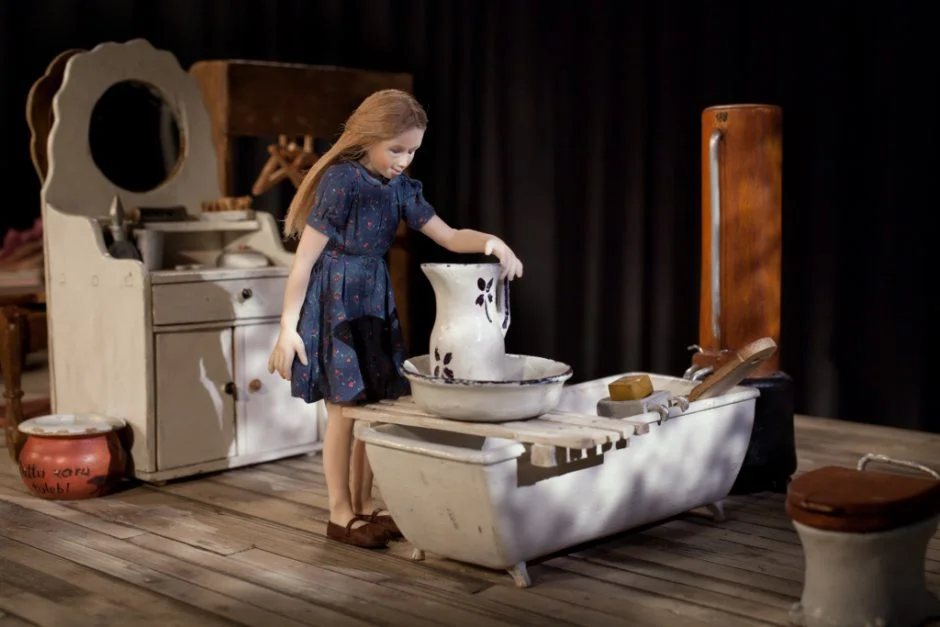
Still from Empty Space

Still from Empty Space

tags: Festivals, animation, animated documentary, LIAF, London International Animation Festival, Nag Vladermersky, Christos Hatjoullis, sophie's story, jennifer zheng, jonas odell i was a winner, samantha moore loop, adara todd twiddly things, Broken – The Women’s Prison at Hoheneck, Volker Schlecht, Alexander Lahl, Little Elephant Kate Jessop, Ülo Pikkov, empty space
categories: Reviews
Tuesday 01.03.17
Posted by Carla MacKinnon
 

Using Animated Documentary to visualise online experiences

This month I have been programming a short film event for Cork Film Festival. The title of the event is The Internet & Me and it looks at the wonder and horror of the ubiquitous Internet and its impact on us personally and collectively. In addition to a panel discussion with psychologists and filmmakers, the event includes six short films which explore themes of cyber-psychology. Five of these six could be classed as animated documentaries.

I did not originally intend to skew the programme towards animated documentary in this way, but found that much of the most interesting work on the theme takes this form. There has been a fair amount written on the suitability of certain subject matter for animated documentary. For example, it has been shown to be well suited to portraying historical and scientific subjects for which footage does not exist; or psychological and emotional subject matter which can be effectively and honestly communicated using animation with its expressiveness and its spatial and temporal fluidity (Honess Roe, 2013).  

I believe that the theme of our online lives is another area that is well suited to animated documentary treatment.

On a superficial level animation is the obvious choice for stories of the online world. The visual arena of the Internet is one of graphical interfaces mediating our experiences and communications. The literal representation of online living is one that invites animation.

But our real lives online are invisible – browser windows, social media graphics and emoticons bear little relation to the daily psychological and emotional experience of being online. Neither do live action representations of digital interactions. The experience of a person chatting via social media is not expressed by the image of a person typing on a laptop. It is also a world away from chatting face to face. So how do we capture this very modern experience? Perhaps this is where the evocative qualities of animation can come into effect. Animation can illustrate internal worlds with vivid honesty at times when live action falls short - and the illustration of the Internet experience in some of the short films that I have programmed for The Internet & Me are great examples of this.

The films in this programme are vastly different from one other. They have little in common, aside from the fact that they all deal with aspects of human-technology interaction, and that the loose link of the ‘animated doc’ label could be attributed to most of them.

BradleyManning

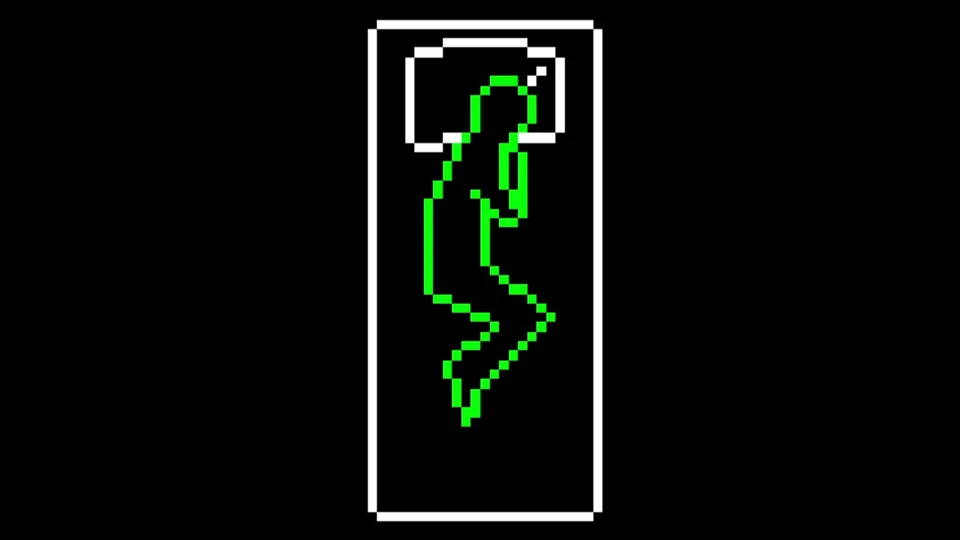
Bradley Manning Had Secrets, directed by Adam Butcher, is an illustration of real transcripts of the chatroom conversations of US army whistleblower Bradley Manning shortly before his arrest. Manning confides in an online friend, sharing intimate details of his cross-dressing and secret gender identity as well as his dealings with Wikileaks. His words are illustrated in primitive 8-bit style graphics, in blocky primary colours. The sparse and stark visual style distances the viewer, giving us only the broadest impression of what we are looking at – no detail, no specificity. It creates a cold space between the subject and audience. Used in combination with the intimacy of the information Manning is sharing, this creates pathos – by being kept at a remove from the character we are drawn into his loneliness and isolation. Manning is betrayed by his online confidante at the end of the film, transforming the story into a strange, frozen tragedy.

EmmaCalder

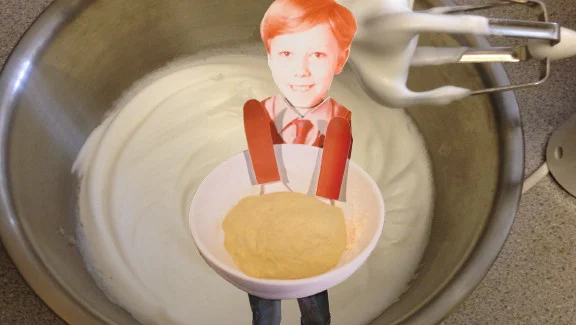
Emma Calder’s Everyone Is Waiting for Something to Happen is, by contrast, a warm and very immediate piece of work. The film describes Calder’s experience of witnessing artist Richard Wright’s journey through cancer diagnosis, treatment and recovery through the window of his Facebook page. Wright was a social media contact of Calder’s, an acquaintance more than a friend; her only knowledge of his life came through what he posted on social media. As well as an interesting portrait of one man’s projected online identity and a cheerful story of human resilience, the film is a reminder that the information we share online can travel further than we expect it to, and that in speaking to our immediate circle we are often overheard by many others.

AvatarDays

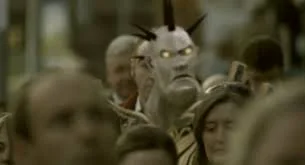
Avatar Days, made in 2009, uses a combination of CGI and live action to paint vivid portraits of online gamers. As we hear them talk in voiceover about their in-game characters we see these characters – trolls, warriors and monsters - walk the drab city streets. This compositing of CGI into live action was relatively uncommon in a short film at the time it was made and the film still stands as technically excellent. The idea for the film is simple and utterly effective, perfectly communicating the value that the players place on their online identities, and implying that these are not simply avatars used online – they are part of the fabric of the human who uses them. In Avatar Days we see online identities and internal worlds merge into the everyday urban experience, in much the same way as thoughts and fantasies weave through and colour our day to day lives.

AdamButcher

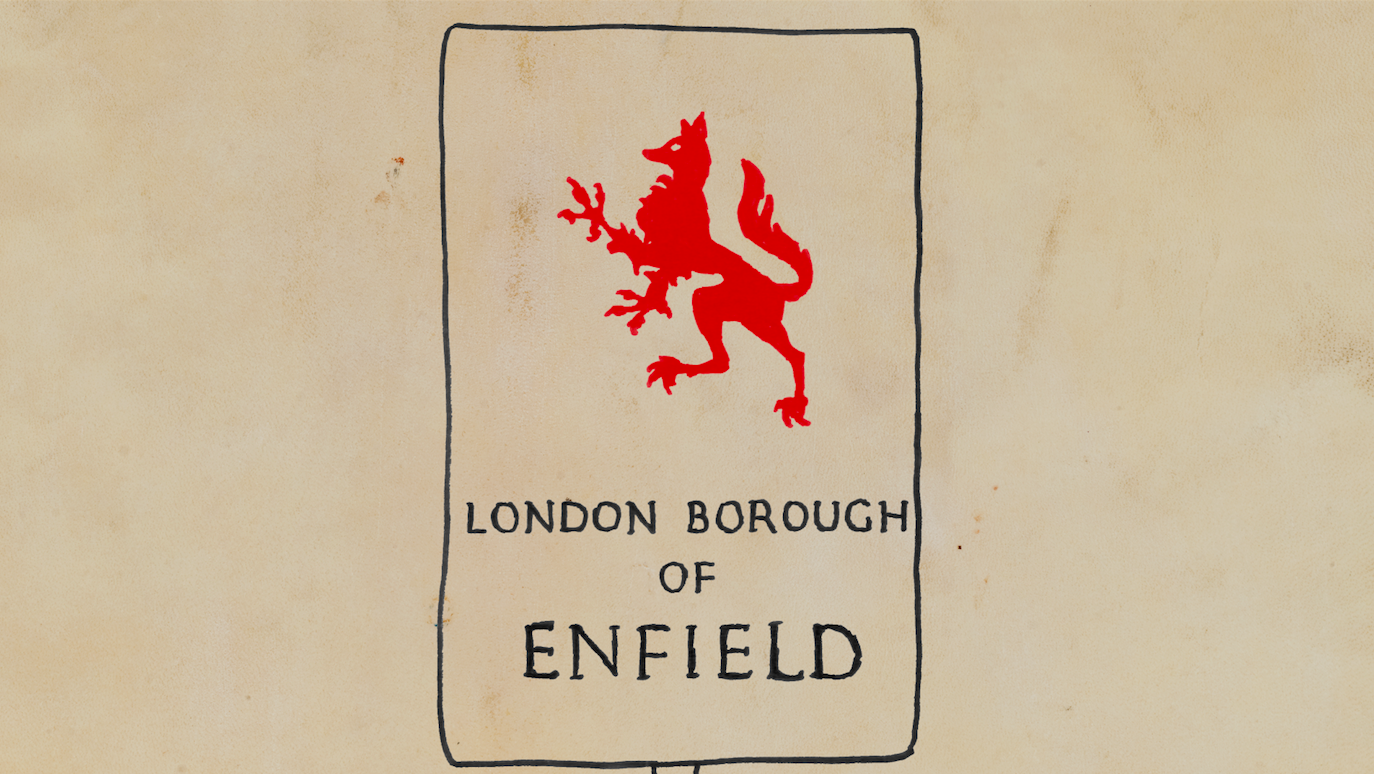
A Date With an Enfield, by Adam Butcher, is a chilly but touching meditation on memory and nostalgia in the digital age. Part letter to a lost love, part exploration of the fallibility of memory and the impossibility of revisiting the past, this film meanders through ruminations on a failed relationship, visual recollections of a journey through London and historical information gathered from Internet searches. The winding nature of the narrative captures the whimsy of time spent online, clicking from link to link and exploring partially-related information in a journey with no destination. Rotoscoping over Google Streetview journeys and Wikipedia entries, Butcher synthesizes the fragile individual experience with the familiarity of mass-information.

Ian W. Gouldstone’s BAFTA-winning guy101, made in 2006, still stands as one of the more distinctive and unsettling shorts about the online world. In the film an unemotional narrator recounts a second-hand story, which he professes to have been told in a gay chatroom. The story is one of illicit sex, violence and brutality and is made all the more alarming by a blackly comic punch line.

guy101

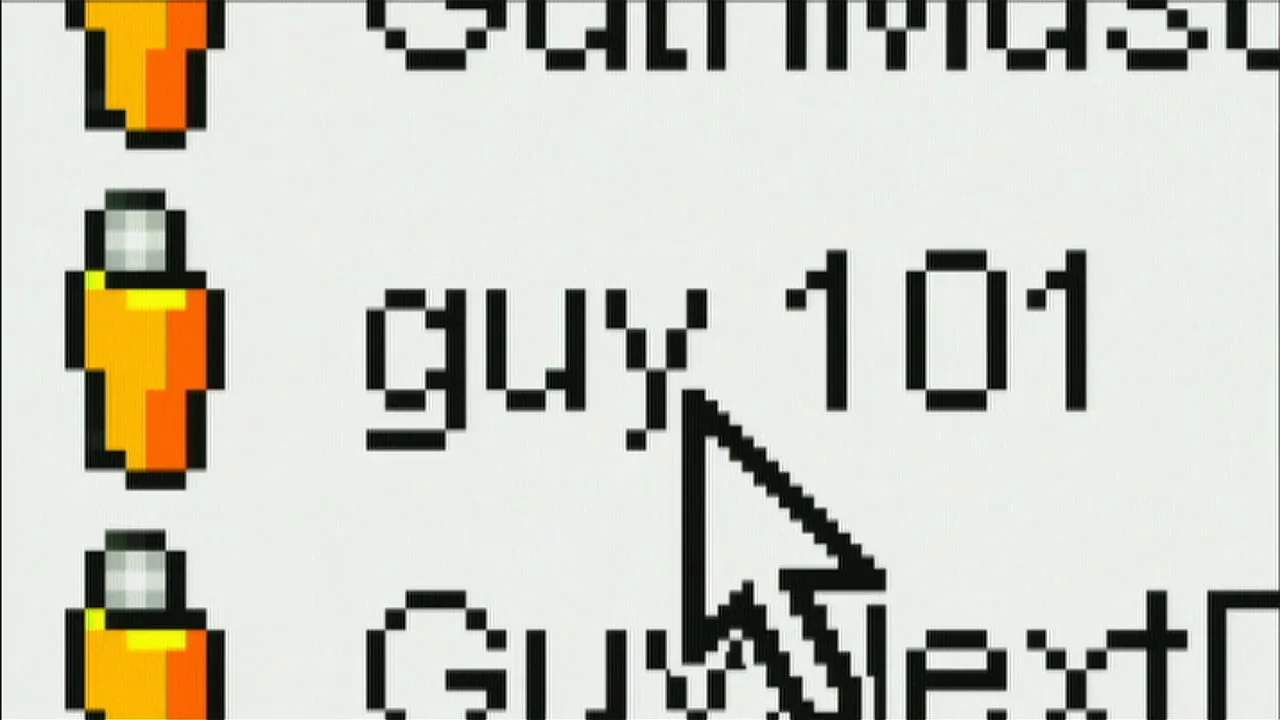
Admittedly, it is tenuous to call this film an animated documentary; it is neither presented nor received as a documentary. Perhaps ‘based on real events’ would be a more accurate label, as Gouldstone’s script was based on a man called Keith who he actually met in a chatroom in 2000. Gouldstone describes his research process as interviewing Keith extensively about his story, while also working out what pieces of the jigsaw could be completed through Googling details of Keith’s life (such as what his home town and car look like). This voyeuristic side of the Internet was a key part of the film for Gouldstone: “There’s a huge part of this film which, for me at least, deals with how much information you can find out about the surface of a person with the help of modern technology” (Gouldstone, 2012). By juxtaposing a deluge of factual information with an absence of verification or resolution in Keith’s story, Gouldstone creates an unsettling effect that captures the essence of some online experiences. Gouldstone’s interest is not in whether Keith’s story is true or not, but more in the ideas and responses that the story raises. Just as story within the film flitters elusively between a seemingly reliable and clearly unreliable narrative, so the film itself exists on a blurred boundary between truth and fiction. Perhaps this distorted, house-of-mirrors version of the truth, in which gaps in the story are filled by our imaginations, is how we perceive many of our online interactions.

The ambiguity of guy101 is heightened by the opaque tone of the narrator – monotone, with a sardonic edge - and the brilliantly creepy graphics, which use visuals from pre-Facebook Internet networks, creating a tapestry of clues and half-formed ideas which obscure more than they reveal. We are left unsure what to make of the story, its protagonist or the narrator, and certain only of the strangeness of the world both on and offline. As with Butcher’s films, guy101 creates an eerie distance between film and viewer, a hollow space in which our questions rattle around and roll back to us only partially answered. This is a space that feeds on desire but leaves it unfulfilled, a cold place in which communication is far from connection.

The animated documentary form has been criticised for creating too much distance between the film and the audience, putting the documentary subject at arm’s length and in this way reducing the audience’s ability to empathise and become immersed in their story (Honess Roe, 2015). Yet perhaps it is this distancing, this slight chill, which makes the animated documentary such an effective form for telling stories about our online lives. Here is an arena in which we function as representations of ourselves, with elements of our identity processed and rearranged for digital use. Our activities online may be very real in practical and emotional terms but they can feel slippery and somehow intangible – distraction, miscommunication and paranoia are rife.

Whether you see social media as essential for modern communication or as a deceptive, narcissistic echo chamber, there is no doubt that it contains both a seductive pull and frustration. Animation has always been used to give form to fantasy - and what is the Internet if not an imaginary space, a universe of half-embodied data representing our knowledge, information, ideas, feelings, memories and dreams? What better tool than animation to take the lead in creating a visual language to represent this intangible space? 


Honess Roe, A. (2013). Animated documentary. New York: Palgrave Macmillan. 

Gouldstone, I. (2012). Ian Gouldstone on guy101. In: Pilling, J. ed. Animating the Unconscious: Desire, Sexuality and Animation. New York, Chichester: Columbia University Press, pp. 173-176. 

tags: animated documentary, cork film festival, rich pickings, guy101, adam butcher, Ian W. Gouldstone, Avatar Days, Emma Calder, Everyone Is Waiting for Something to Happen, Bradley Manning Had Secrets, online psychology, Annabelle Honess Roe
Friday 11.11.16
Posted by Carla MacKinnon
 
Newer / Older